
What is Boba Made Of? The Ultimate Guide to Tapioca Pearls
Some toppings are easy to understand at first glance. Fruit jelly tastes fruity. Milk foam looks creamy. But the pearls at the bottom of a bubble tea cup are different. They are chewy, glossy, a little mysterious, and often the first thing people ask about. So what is boba made of? The answer starts with a simple ingredient that turns into one of the most recognizable textures in modern tea culture.
At Gong cha, boba is more than something added to a drink at the end. The right pearls can change the pace of every sip, turning milk tea, fruit tea, or a freshly brewed tea base into a full texture experience. This guide breaks down what the bubbles in bubble tea actually are, how boba balls are made, and why that signature chewy texture is such a big part of the drink people love.
What Are the Bubbles in Bubble Tea?
When people ask, "what are the bubbles in bubble tea?" they are usually talking about tapioca pearls. These are the small, round, chewy pearls that sit at the bottom of the cup and travel up the straw with each sip. They are also commonly called boba pearls, tapioca boba, or simply boba.
The word "boba" can be a little confusing because it is used in two ways. Sometimes it refers to the full drink, as in boba tea or bubble tea. Other times, it refers specifically to the pearls. In this article, boba means the chewy tapioca pearls unless we are talking about the drink as a whole.
What makes boba special is not just its look. It is the contrast. A smooth drink becomes more playful when it includes something chewy. A creamy milk tea feels more satisfying when each sip has a little bounce. That textural surprise is one reason bubble tea flavors can feel so customizable from one order to the next.
What is Boba Made Of?
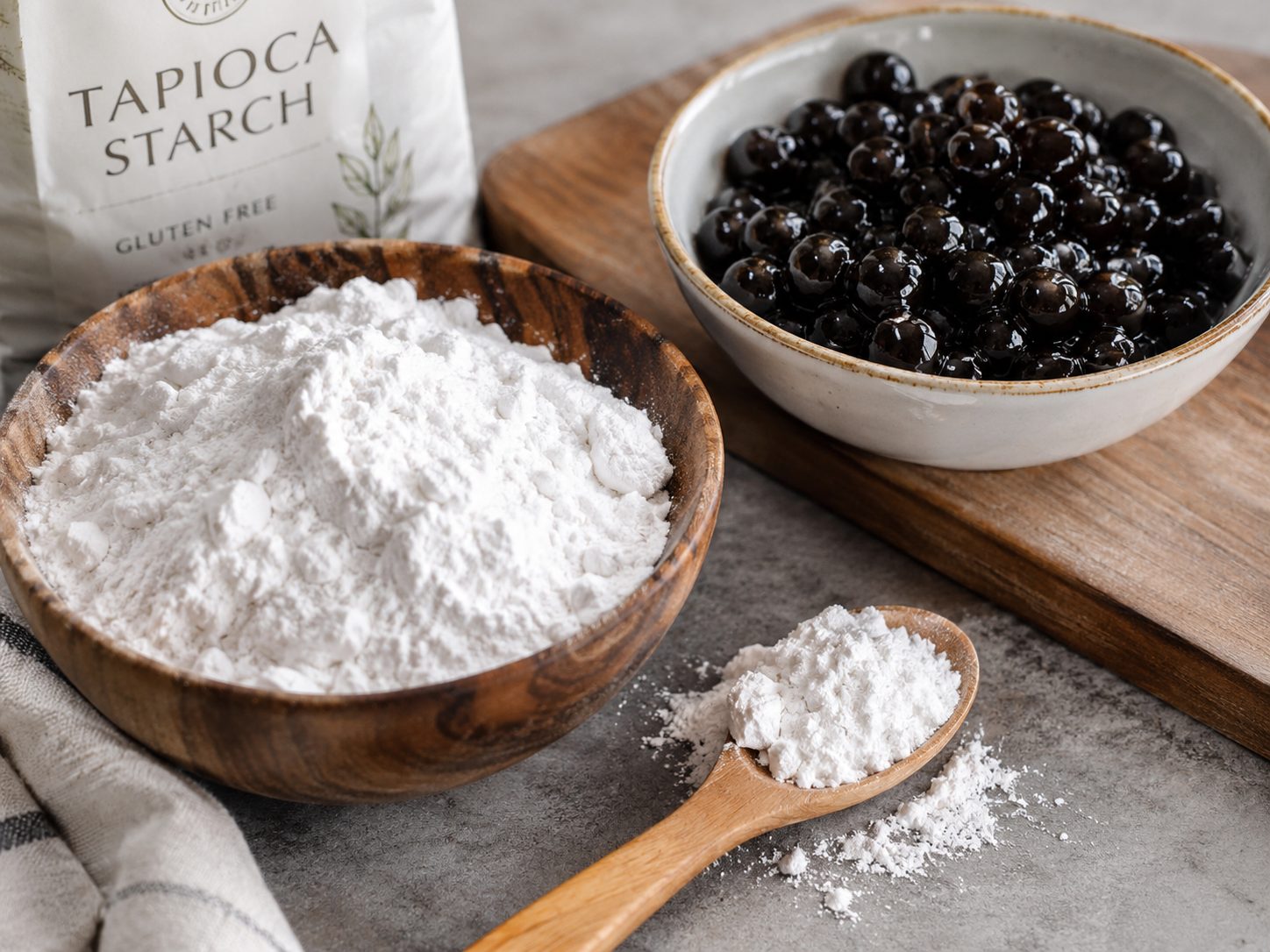
Traditional boba pearls are made primarily from tapioca starch, which comes from the cassava root. Cassava is a starchy root vegetable grown in many warm regions around the world, and once its starch is processed into tapioca, it can be used to create the soft, springy pearls associated with bubble tea.
So if you have ever wondered what are boba balls made of, the simplest answer is this: tapioca starch, water, and sweetener are the foundation. Depending on the recipe, pearls may also include brown sugar, caramel coloring, or other ingredients that help create the dark color and subtle sweetness people associate with classic black boba.
That also means boba is not the same as gelatin, candy, or popping pearls. Classic tapioca pearls are starch-based, which is why they have a chewy, elastic texture instead of a gummy or jelly-like bite. They do not melt into the drink. They hold their shape, absorb syrup, and add a second rhythm to the cup.
In a cup of boba tea, the pearls are only one part of the experience. The drink itself may include black tea, green tea, oolong tea, fruit flavor, milk, foam, ice, or other toppings. But the pearls are usually what make someone pause and ask what is boba tea made of in the first place.
How Are Boba Balls Made?
The journey from tapioca starch to chewy pearl is surprisingly precise. The starch is mixed into a dough, shaped into small spheres, and dried or prepared for cooking. Once the pearls are ready to serve, they are boiled until the center softens and the outside becomes tender, glossy, and chewy.
Cooking time matters because tapioca pearls are texture-sensitive. Undercooked pearls can feel hard in the center. Overcooked pearls can become too soft and lose their bounce. The goal is a pearl that is soft enough to chew comfortably but firm enough to give that satisfying boba texture.
After cooking, the pearls are typically rinsed and soaked in syrup so they stay tender and pick up sweetness. Brown sugar syrup is a classic choice because it gives the pearls a warmer, caramel-like note that works especially well with milk tea. This is why boba often tastes subtly sweet even before it mixes with the drink.
Freshness is just as important as cooking. Tapioca pearls are best when they are served soon after preparation, while they still have their bounce. At Gong cha, pearls are prepared fresh every four hours so the texture stays soft, chewy, and ready to pair with the drink you choose.
The Secret to the Perfect Q Texture
One of the best words for great boba texture is "Q." In Taiwanese food culture, Q describes a bite that is springy, chewy, and pleasantly elastic. It is not just softness, and it is not toughness. It sits in that satisfying middle place where the pearl gives a little resistance, then bounces back as you chew.
That Q texture is what separates good boba from pearls that are simply round. The texture depends on the starch, the size of the pearl, the cooking time, the holding time, and the syrup. Even the drink pairing matters. A creamy milk tea can make pearls feel richer, while a fruit tea can make the same pearls feel lighter and more refreshing.
The best way to experience Q is to slow down for a second. Instead of treating the pearls like an add-on, notice how they change the drink. They make each sip more interactive. They add chew to something cold and smooth. They turn a simple tea break into something you participate in, not just something you drink.
Other Types of Boba: Popping Boba and Crystal Boba
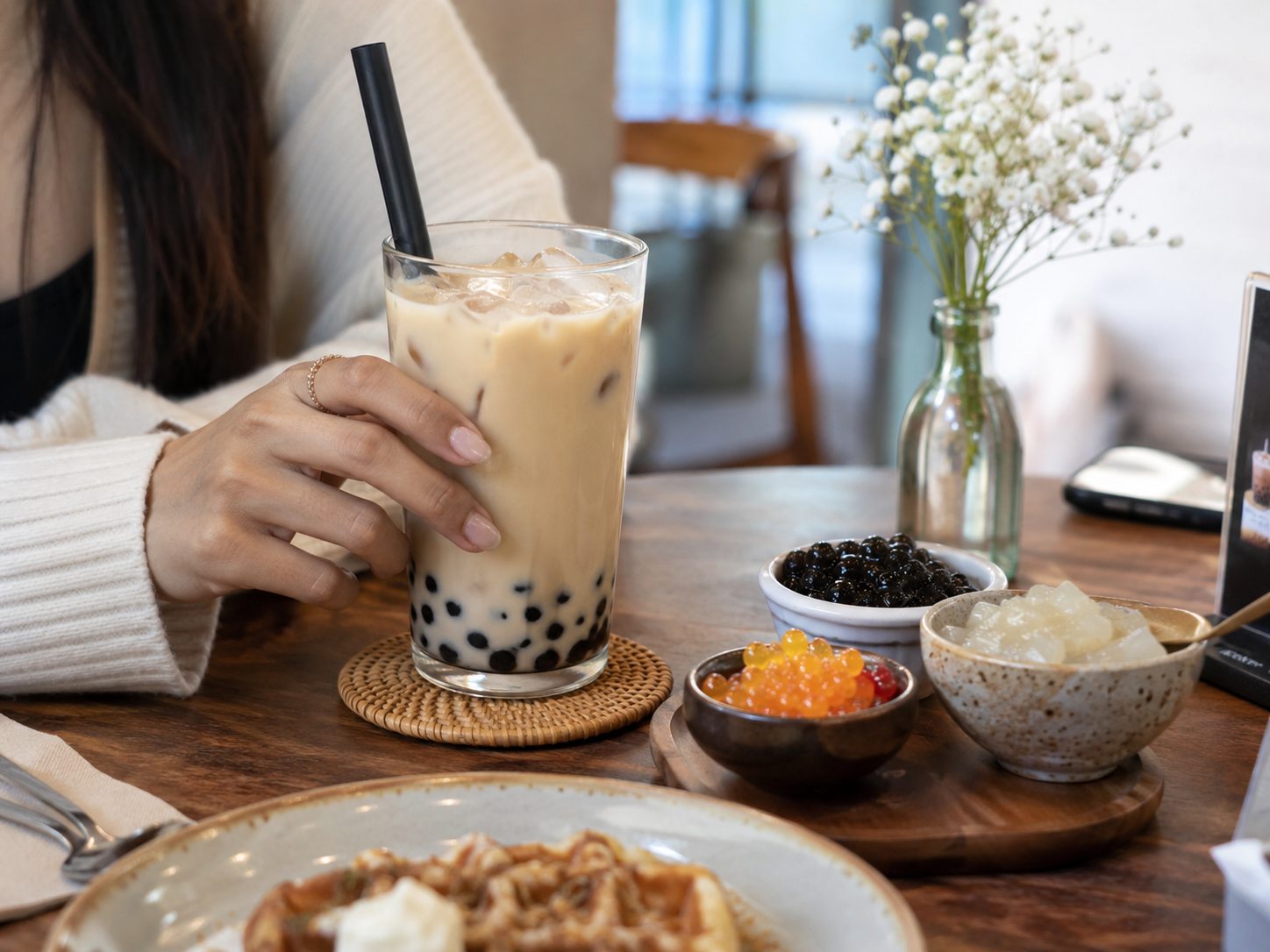
Classic tapioca pearls may be the original bubble tea topping, but they are not the only option. Over time, boba culture has expanded to include different textures, flavors, and finishes. Some toppings are chewy, some burst, and some add a lighter jelly-like bite.
Popping Boba
Popping boba is very different from traditional tapioca pearls. Instead of a chewy starch-based center, popping pearls are filled with flavored liquid that bursts when you bite down. They are often paired with fruit teas, slushes, or bright seasonal drinks because they add a juicy pop of flavor instead of a deep, caramel-like chew.
Crystal Boba and Jelly Toppings
Crystal boba and jelly toppings are usually lighter in texture than classic tapioca pearls. They can add chew without the same dark color or brown sugar note, which makes them a good fit for refreshing drinks. Coconut jelly, lychee jelly, aloe, and other topping styles can also bring a cleaner, fruitier finish to the cup.
None of these options replaces classic boba. They just create different experiences. If you want the traditional bubble tea chew, start with tapioca pearls. If you want something juicy and playful, try popping pearls. If you want a lighter texture, explore jellies or crystal-style toppings. The best topping is the one that matches the drink and the mood.
Ready to taste the difference for yourself? Find a Gong cha near you, check local availability, and build a cup with the pearls, toppings, sweetness, and ice level that fit your perfect boba moment. Product availability and customization options may vary by location.